
Arrest Warrants in Cooper County
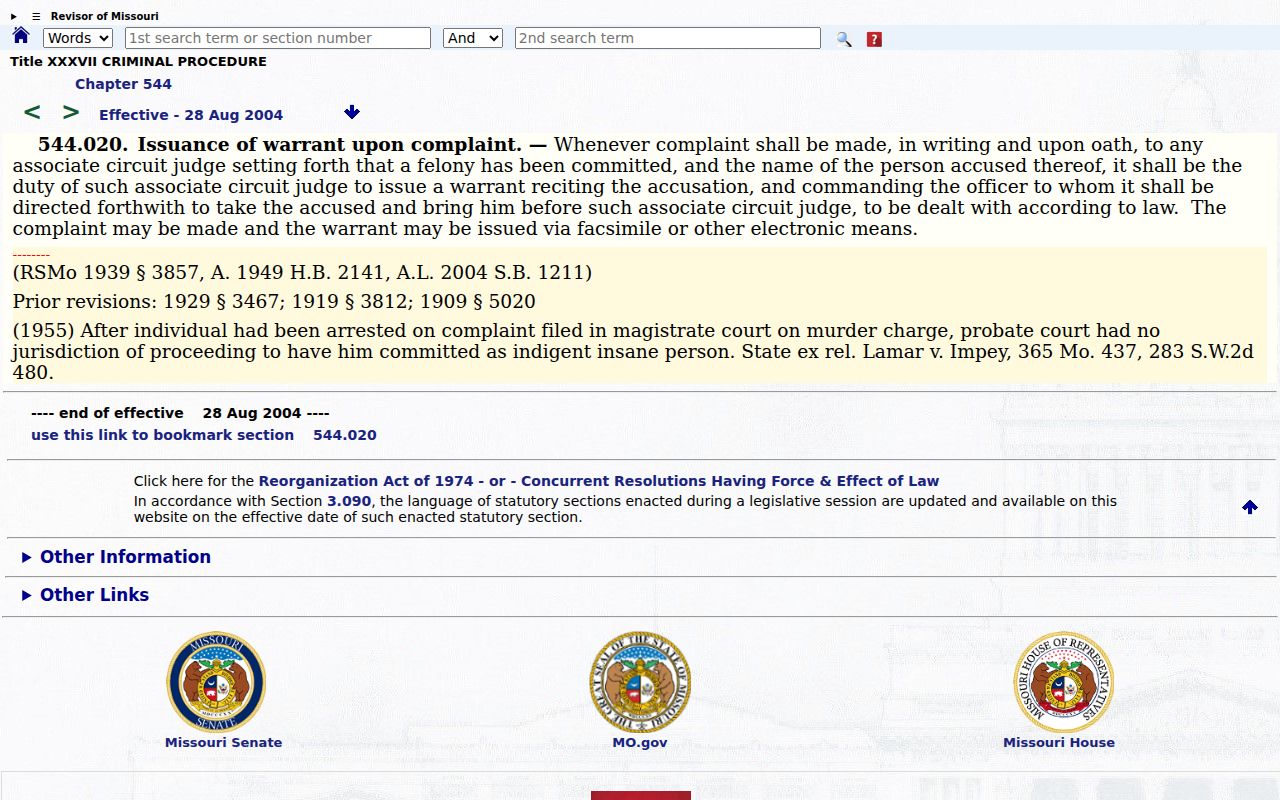
Missouri law draws a clear line before any arrest warrant can issue. Under section 544.020, a written sworn felony complaint goes to an associate circuit judge, and only a probable cause finding by that judge produces a warrant. Rule 22.04 adds its own split. A summons commands a person to appear, while an arrest warrant commands that the person be taken into custody. The choice between them rests on procedural findings, not on a clerk's preference. That matters when you read Cooper County court records, because a warrant case is really a sequence of steps. First comes the complaint or indictment. Then the judicial decision, then the process the judge chose. Service and return follow, and disposition comes later. The Cooper County Sheriff serves what the court issued. He cannot rewrite the issuing order. Only the court can recall or quash its own warrant, so any question about the order goes back to the bench that signed it.
What a Cooper County Arrest Warrant Contains
A Cooper County arrest warrant rests on a paper trail. Section 544.020 requires a written, sworn felony complaint and a probable cause finding by an associate circuit judge before a warrant issues. Rule 22.04 then separates a summons from an arrest warrant based on procedural findings. Read the file as a sequence: complaint or indictment, judicial decision, process, service or return, then disposition. The Sheriff serves the order but cannot rewrite it.
| Warrant Number | localized public record information |
|---|---|
| Named Subject | Judicial process directing an officer to bring the accused before the proper Cooper County court. |
| Charge / Offense | Judicial process directing an officer to bring the accused before the proper Cooper County court. |
| Issuing Judge / Court | Judicial process directing an officer to bring the accused before the proper Cooper County court. |
| Bond / Bail Set | Judicial process directing an officer to bring the accused before the proper Cooper County court. |
| Date Issued | Judicial process directing an officer to bring the accused before the proper Cooper County court. |
How Arrest Warrants Are Served
An arrest warrant in Cooper County does not sit idle once signed. The Cooper County Sheriff executes it, and the Detention Center takes custody once a person is brought in. But the paper trail behind that warrant started much earlier, and it is worth tracing. Section 544.020 demands a written sworn felony complaint plus a probable cause finding from an associate circuit judge. Rule 22.04 then decides the form of process, because a summons and an arrest warrant turn on different procedural findings. One orders an appearance. The other authorizes an arrest. Cooper County court records should be read as a sequence rather than a single event: complaint or indictment, judicial decision, process, service or return, and later disposition. Service does not end the case. The Sheriff cannot rewrite the issuing order, and only the issuing court can recall or quash what it signed.
Arrest Warrant vs Summons vs Bench Warrant
Missouri gives judges more than one tool. Under section 544.020, a written sworn felony complaint and a probable cause finding by an associate circuit judge open the door to an arrest warrant. Rule 22.04 separates that warrant from a summons, which orders an appearance rather than an arrest. A bench warrant fits neither box neatly. In Cooper County, read the court record as a sequence, complaint through disposition. The Sheriff serves the order and cannot rewrite it.
| Feature | Arrest Warrant | Summons | Bench Warrant |
|---|---|---|---|
| What It Orders | The court record identifies the complaint, issuing judge, alleged offense, service event, and later disposition. | The court record identifies the complaint, issuing judge, alleged offense, service event, and later disposition. | The court record identifies the complaint, issuing judge, alleged offense, service event, and later disposition. |
| Basis | The court record identifies the complaint, issuing judge, alleged offense, service event, and later disposition. | The court record identifies the complaint, issuing judge, alleged offense, service event, and later disposition. | The court record identifies the complaint, issuing judge, alleged offense, service event, and later disposition. |
| Who Issues It | The court record identifies the complaint, issuing judge, alleged offense, service event, and later disposition. | The court record identifies the complaint, issuing judge, alleged offense, service event, and later disposition. | The court record identifies the complaint, issuing judge, alleged offense, service event, and later disposition. |
| How to Respond | The court record identifies the complaint, issuing judge, alleged offense, service event, and later disposition. | The court record identifies the complaint, issuing judge, alleged offense, service event, and later disposition. | The court record identifies the complaint, issuing judge, alleged offense, service event, and later disposition. |
What to Do If There Is a Warrant for You
Found an active warrant in your name in Cooper County? Confirm the case with the Circuit Clerk first. Section 544.020 shows the path: sworn complaint, probable cause, judicial signature under Rule 22.04, then service and return. Serving the warrant or posting bond does not close the case, and disposition still belongs to the court. Talk to a lawyer before an appearance or voluntary surrender.
Important: The court record identifies the complaint, issuing judge, alleged offense, service event, and later disposition.
Official Source for This Record Route
The official source documents the public office or rule used for this warrant-record path.
Cooper County warrant status still turns on one thing: confirmation from the issuing court or the proper agency. An official record is the only word that counts.